Dossier · November 11, 2026
AI sovereignty: two extreme cases, one dependency
Mistral claims sovereignty. Claude makes no such claim. We read the contracts, the architectures and the costs. The problem is neither the flag nor the model: it is what changes without you.

· CEO & Founder · 13 min read
It all started with a conversation.
A user alerts us. He had started reading Mistral’s terms, and several clauses made him wince. He sends us his notes. They are partial, sometimes approximate, but there is a thread. We decide to take the case back up.
We reopened the texts. The commercial terms. The data processing agreement. The privacy policy. The list of subprocessors. The documentation on zero retention. We checked every statement, every date, every quote. What we found is more interesting than what he had flagged.
Then a question imposed itself.
If the provider that claims sovereignty the loudest has these blind spots, what becomes of sovereignty at the one that makes no such claim? So we widened the inquiry to Anthropic.
Not to pile a second scandal on top. To take the other end of the spectrum. Mistral is the most favourable case: the European champion, the provider of public administrations, the one expected to embody sovereignty. Anthropic is the least favourable case: an American laboratory, closed, that promises no sovereignty and sells raw capacity. If the problem shows up at both ends, it is not a provider problem. It is a model problem.
At Mistral, the dependency is contractual. Optional notification, a short deadline, American subprocessors. At Anthropic, it is product and economic. The model degrades under the same name, and the cost per task explodes.
In both cases, the question is not the flag. It is peace of mind.
A French SME does not buy geopolitics. It buys the ability to commit: a cost it can forecast, a deadline it can meet, a compliance it can document, a continuity it can maintain. If the contract can change without it, and if the model can change without it, it cannot commit. That is the brake on adoption.
Let us be clear about our position. Cloud services have real value as a complement, most companies are hybrid, and that is normal. The aim of this dossier is not to disqualify these services: it is to raise awareness on the contractual side, on what can change without you.
Two providers. Two extremes. One question: what happens when what serves you changes without you?
What this dossier does not say. We are not saying Mistral is not sovereign. We are saying its contract does not guarantee everything the word promises. We are not saying Anthropic is malicious. We are saying its product can change under your feet, and that this has a cost. Both can be true at the same time. That is precisely the point of looking at them together.
1. Mistral, on the edge of contractual dark patterns

Let us start with what Mistral writes in black and white. Its privacy policy, section 5, provides that the API keeps what you send and what the model replies for 30 rolling days, to monitor abuse, unless zero retention is activated. For the Agents API, retention lasts until the account is deleted.
Zero retention, abbreviated ZDR, for zero data retention, means the provider neither stores nor logs your inputs and outputs once the answer is delivered. It is not encryption, and it is not anonymisation: it is a promise not to retain. At Mistral, this option exists, and its documentation frames it tightly.
It is reserved for paid plans. It only covers the stateless endpoints: chat/completions, embeddings, OCR (optical character recognition), audio, moderation, classification. It excludes agents, batch, files, conversations, libraries, Vibe Work and Le Chat, as well as Labs models.
It is not a toggle in a console. You request it from support, with legitimate grounds, and Mistral grants or refuses it at its discretion. It is not a contractual right, it is not a setting. It is an exception, requested and granted case by case. And it is a control separate from the training opt-out: enabling one does nothing for the other.
There is a more surprising part. The commercial terms, article 4.3, provide that for Labs and Preview models, the training opt-out and zero retention do not apply: data may be used for training, even with the opt-out, even with ZDR.
The same logic applies to feedback. A thumbs up or down, and the associated data, may be used to train the models: the commercial terms (articles 2.4 and 4.2(b)) and the data processing agreement (article 2.3) provide for this, with no opt-out, and this feedback is not confidential.
The most disputed clause remains the subprocessor clause. The data processing agreement, articles 7.1 and 7.2, works by general authorisation: Mistral publishes the list of its subprocessors on its Trust Center, and leaves you a right to object.
In detail: Mistral commits to “reasonable notice” before any new subprocessor, without saying through which channel; the only channel the contract names, the automatic email, is only sent to subscribers of the Trust Center updates; the objection is made in writing, to privacy@mistral.ai, within 10 days; the grounds must rest on reasonable reasons related to data protection, within the meaning of the General Data Protection Regulation (GDPR), not on a sovereignty veto; after 10 days, silence means acceptance; and if the objection leads to no agreement, Mistral may terminate the contract or the affected products.
This construction is legal, and even standard. Article 28(2) of the GDPR allows a general authorisation, provided the customer is informed and given the possibility to object; the European Data Protection Board (EDPB) guidelines 07/2020 only ask for a sufficient period. Mistral is in line with market practice here.
| Mechanism | What the clause does | Effect |
|---|---|---|
| Silence means acceptance | General authorisation, with 10 days to object. | With no reply by the tenth day, the new subprocessor is deemed accepted. |
| Optional information | “Reasonable” notice with no channel specified; alert email reserved for Trust Center subscribers. | Without a subscription, nothing guarantees the notice reaches you. |
| Asymmetric friction | Objection in writing, on GDPR grounds. | A sovereignty ground is not admissible. |
| Cost of refusal | Without an agreement, Mistral may terminate the contract or the affected products. | Refusing costs more than accepting. |
This is not a veto. It is consent by default dressed up as a right to object: the information is optional, the deadline is short, the grounds are limited, and refusal costs more than acceptance.
The term in our title is deliberately provocative. A dark pattern is, originally, an interface mechanism designed to make one choice harder than another; applied to a contract, it describes a mechanism, not a legal qualification, and we judge nobody’s intentions. The strongest point is this one: consent is presumed, while the information needed to give it is, itself, optional.
Note: the blind spots in the subprocessor list
Beyond the dark pattern, there are blind spots. The subprocessor list published for the API shows Microsoft, Google (including an endpoint in the United States), CoreWeave and Mistral Compute. The first three are American companies. Microsoft and Google are certified under the Data Privacy Framework (DPF), the EU–US agreement that covers transfers to certified American companies. For CoreWeave, one of Mistral’s compute providers, we found no public DPF certification.
Why does it matter? Because European hosting is not always enough. A legal study commissioned by the Dutch government, published in February 2026, counts 26 disclosures by Microsoft of business customers’ content held outside the United States, under American warrants, between 2018 and 2024. And in May 2026, Microsoft and Meta passed to the US Congress information about Dutch civil servants; we devoted a full dossier to that case. The probability is low, the impact would be high, and the contract does not rule it out.
2. Claude: the nerf*, or the model that changes under the same name
Anthropic, for its part, claims nothing: it is the dependency that does not say its name. The American laboratory sells “frontier intelligence”, and the problem starts with a sentence from its documentation:
In plain terms: the model keeps its name and its weights, but everything around it can change. This sentence is honest, and that is exactly what interests us. It is normal for the service surrounding a model to change; no provider freezes its infrastructure. What is missing is the counterpart: nothing guarantees you the version of the layer that serves the model.
Concretely, a change of system prompt, execution harness or routing can degrade your results overnight, without notice. The model’s name, for its part, has not changed. Here is what Claude’s recent history shows:
| Period | Model | What happened |
|---|---|---|
| February–April 2026 | Opus 4.6, in Claude Code | Default effort lowered from high to medium (4 March), a cache bug (26 March), an anti-verbosity system prompt (16 April): three distinct causes, acknowledged by Anthropic. |
| May–July 2026 | Opus 4.8 | Regressions reported on GitHub; official incident on 30 July: “Degraded performance on Claude Opus 4.8”. |
| October–November 2026 | Opus 5.5 | GitHub issues (including #105477, opened on 27 October, and #105112), a Hacker News thread above 800 points, a peak of complaints on 4 and 5 November; no public comment as of 7 November. |
Two precisions. The post-mortem of 23 April 2026 acknowledges, one by one, the three causes of the first line. And the summer incident is official: “Degraded performance on Claude Opus 4.8”, on 30 July, on Anthropic’s status site.
One cannot prove that Opus 5.5 was nerfed. One can show that the perceived degradation comes back regularly, that Anthropic has acknowledged it at least once, and that its architecture allows the behaviour to change without changing the model. The problem is not a conspiracy. It is a dependency: a model can degrade after an update, and there is nothing you can do about it.
What users have been describing since late October is not a hard failure. It is slowness, longer answers, repeated attempts for the same task. On GitHub, a Max subscriber reports using 71% of the weekly limit within 24 hours of the reset. Another measures thinking tokens up 51% per answer, and the share of answers needing correction rising from 5% to 25%. On Hacker News, the “Is Opus 5.5 nerfed?” thread passes 800 points and 500 comments.
On the other side, independent trackers measure the models day after day, and some conclude that nothing has moved: LiveNerf, which runs the same panel of 78 questions through Opus 5.5 every day, detects no change as of 10 November. Whom to believe? Neither, entirely. Testimonies are not measurements. And these trackers test frozen questions, not your tasks; we have no visibility into their independence, or into how representative their methods are. Without an announced version of the serving layer, nobody can settle it: not the users, not the trackers, not us.
The same month, another incident was a reminder that you do not control what the tool does either: Claude Code passed some users’ email addresses to websites, and Anthropic apologised. But the heart of the matter remains the degradation.
*“Nerf” comes from video games: when a publisher weakens a weapon or a character in an update, players say it has been “nerfed”. Claude users picked up the word for a model that, from one week to the next, gets worse under the same name.
3. The nerf is not an opinion. It is a bill.
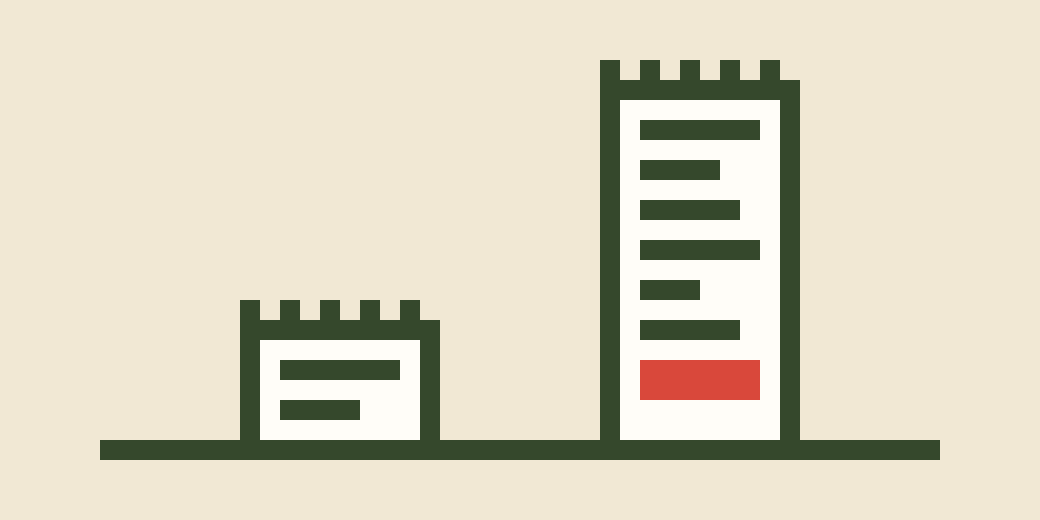
When a model degrades, the right metric is not the price of a token. It is what a finished task costs. The list price does not move; the number of tokens does.
Let us do the sum for a company of 600 employees. Assumption: 5 requests per working day per equipped employee. That is slightly above published figures: at Wipro, the Indian IT services group, over 100,000 employees equipped with Copilot send 7.5 million prompts a month, about 3.5 a day. Each request reads 30,000 tokens (context, files, history) and writes 2,000, at Opus 5.5’s public price: $4 per million input tokens and $20 per million output tokens, about €3.57 and €17.83 at the ECB rate of 10 November 2026. Then two nerf scenarios, drawn from the reported orders of magnitude: +50% tokens, like the thinking tokens measured on GitHub, and ×3, the top of the testimonies.
| Before | Moderate nerf (+50%) | Severe nerf (×3) | |
|---|---|---|---|
| Cost per request | €0.14 | €0.21 | €0.43 |
| Cost per month per employee | €14.98 | €22.47 | €44.94 |
| Cost per month, 600 employees | €8,989 | €13,483 | €26,966 |
| Cost per year, 600 employees | €107,865 | €161,798 | €323,596 |
| Unsigned yearly overrun | — | +€53,933 | +€215,730 |
| A weekly quota lasts | 7 days | 4.7 days | 2.3 days |
The amount per request looks trivial. Multiplied by 600 employees and twelve months, the moderate scenario adds €54,000 a year to the budget, and the severe one nearly €216,000. Nobody signed anything, nobody saw anything go by.
The price has not changed by a cent. On a subscription, the effect is the same, in time: a quota meant to last the week is gone in two or three days. For the rest of the week, usage limits kick in: the team is blocked, projects stop without notice. You can no longer hold a client price or a delivery date, or justify a return on investment.
The “nerf” is not only a question of IQ. It is a question of cost price. A model that consumes three times more tokens for the same task is a 200% increase that nobody signed.
It is a sword of Damocles for businesses. In the 2010s, they were asked to estimate their cloud consumption before migrating, and nobody knew. With AI, it is the same: everyone wants to adopt it, and businesses are asked to forecast their token consumption. They have no idea. And even when they get to a roughly right figure, it can become obsolete overnight, because the model’s routing has changed.
Sovereignty is also economic predictability.
4. Two extremes, one dependency

Let us recap. At Mistral, the dependency is contractual: optional information, a 10-day deadline, American subprocessors. At Anthropic, it is product and economic: the model degrades under the same name, and the cost per task explodes. Two mechanisms, one and the same effect: you can no longer commit with peace of mind.
Sovereignty is the condition: where your data is, under which law, with which subprocessors. Peace of mind is the result: a predictable cost, a stable behaviour, a contract that does not change without you. AI adoption in French SMEs needs both, and one is not enough without the other.
We are not saying Mistral is less sovereign than Anthropic. Mistral is the most favourable case, and that is exactly why it matters: if the best pupil has blind spots, the problem is not the pupil, it is the curriculum.
The cloud remains a legitimate complement, and hybrid is the norm. But a hybrid system needs a stable core. At Appliance Labs, we draw a simple conviction from this: there is nothing more sovereign than a box sitting on a desk. It is the only perimeter where the contract, the model version and the cost per task sit in the same architecture, the one you can inspect.
Sovereignty is not a logo. It is a contract, an architecture, and a cost per task.